
“Is AI expensive for a small business to implement?”
Not necessarily. Most small business owners start with tools like ChatGPT, Claude, or Gemini, which offer powerful features for free or around $20/month. And many tools you likely already use have AI-powered tools built into them now. The real cost is usually the time spent learning how to use them, but the return on investment is found in the hours of manual labor you reclaim each week.
“Will using AI make my customer service feel robotic?”
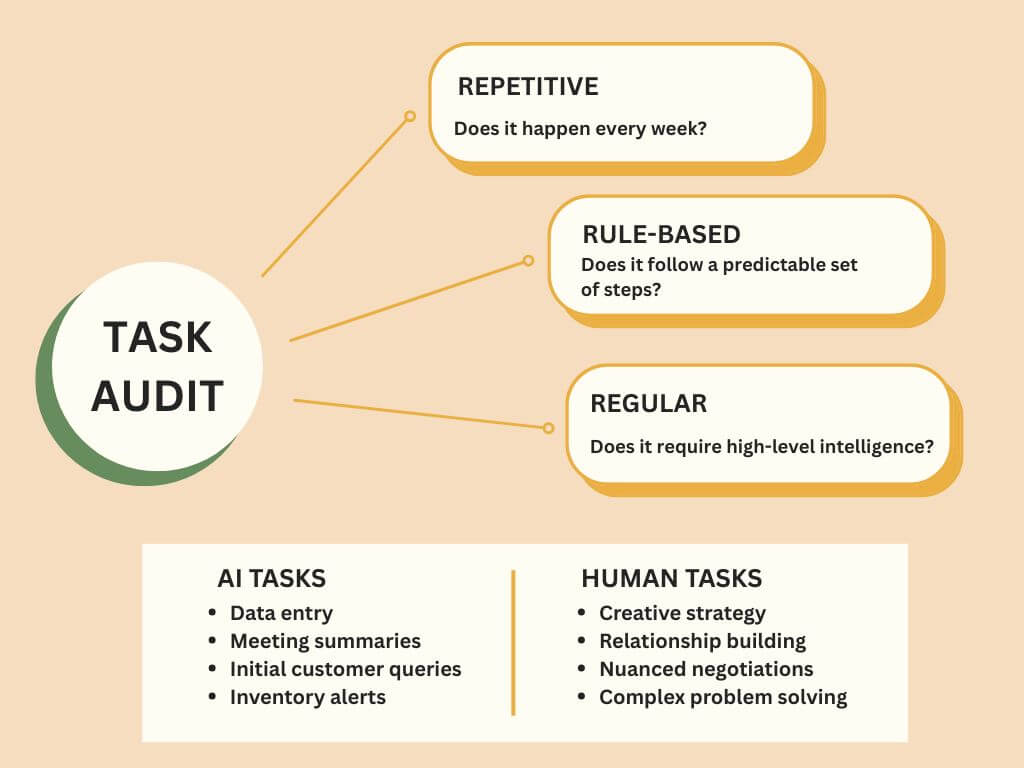
It’s actually the opposite when done right. By using AI to handle routine questions (like “Where is my order?” or “What are your hours?”), you free up your human team to handle complex issues with more empathy and patience. The goal isn’t to replace human connection, but to remove the drain of repetitive tasks so your team can focus on building real relationships.
“Is it safe to upload my business data or financial spreadsheets to AI?”
You should avoid putting highly sensitive data (like social security numbers or unencrypted passwords) into public AI models. However, most enterprise-level tools (like Microsoft Copilot or paid versions of ChatGPT Team) offer higher data privacy standards where your data isn’t used to train their models. Of course, always check the privacy settings of a tool before uploading proprietary financial exports.
“Can AI help me if I’m a solopreneur with no employees?”
Absolutely. AI can act as your research assistant, a copywriter, and a data analyst all in one. For someone flying solo, AI increases your capacity, allowing you to handle a volume of marketing and administration that would usually require a 3-person team.
“What is the biggest mistake business owners make with AI?”
The most common mistake is buying five different tools before mastering one. It’s better to pick one specific bottleneck (like your overflowing inbox or slow social media drafting) and solve it completely before moving to the next. AI works best when it’s solving a problem you’ve already identified.