
“What accounting software should I use for a small business in 2026?”
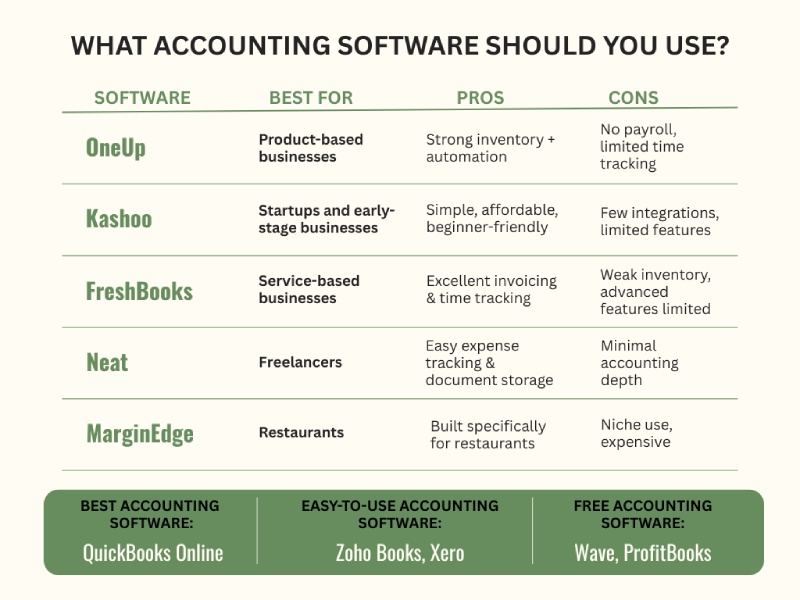
The best accounting software depends on your business model. QuickBooks Online remains the industry standard for general scalability, while FreshBooks is best for service-based agencies. For inventory-heavy businesses, OneUp or MarginEdge offer superior automation. Selecting the right brand ensures your financial data is tax-ready and reduces manual reconciliation errors.
“Can I use free accounting software for my business?”
Yes, you can use free software like Wave or ProfitBooks, but they are best suited for solo freelancers with simple transactions. As your business grows, free versions often lack the internal controls and audit logs required for complex tax filings or multi-state operations. Moving data to a paid system later can also be costly.
“How does AI automation in accounting software reduce tax risk?”
AI reduces tax risk by using intelligent categorization and OCR receipt capture to eliminate manual entry errors. However, to stay compliant, you must verify AI suggestions. Improperly coded expenses, like labeling a large equipment purchase as a “supply,” can lead to incorrect depreciation and potential red flags during a tax audit.
“What are the must-have software integrations for small business accounting?”
At a minimum, your software should integrate with your bank, payroll provider, and payment processor. In 2026, API-based integrations are preferred over file uploads because they provide real-time data sync. This ensures your profit-and-loss statements are accurate when it’s time to estimate quarterly tax payments.
“Why is double-entry accounting important for business growth?”
Double-entry accounting is the professional standard that ensures your Balance Sheet and Income Statement remain in sync. It tracks not just what you spent, but how your assets and liabilities change. Most lenders and tax professionals require double-entry records to verify your business’s financial health before approving loans or complex deductions.
“Is cloud-based accounting software secure enough for financial records?”
Cloud-based accounting is generally more secure than local storage because it uses bank-level encryption and provides automated backups. In an audit scenario, having a digital audit trail stored in the cloud ensures your records are permanent and accessible, protecting you from data loss due to hardware failure or local disasters.